
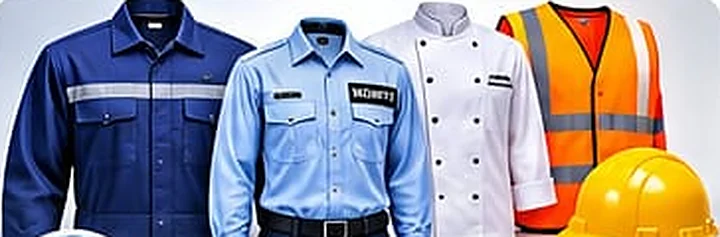
Why Fabric Choice Matters More Than Design
Most uniform complaints are fabric complaints: shirts that feel hot by noon, colours that fade after a month of washing, trousers that shrink, polos that lose shape. Design matters for appearance, but fabric decides comfort and durability — and Lahore's long, hot summers and humid monsoon make that choice especially important.
The Main Fabric Options
| Fabric | Strengths | Weaknesses | Good for |
|---|---|---|---|
| 100% cotton | Breathable, soft, comfortable in heat | Wrinkles; can shrink and fade | Office shirts, T-shirts, summer wear |
| Polyester | Durable, holds colour, quick-drying | Less breathable; can feel warm | Sportswear, outerwear, event wear |
| Poly-cotton blend | Balance of comfort and durability | Less breathable than pure cotton | Daily staff uniforms, polos, workwear |
| Drill / twill | Strong, abrasion-resistant | Heavier | Coveralls, work trousers, chef wear |
| Pique knit | Textured, breathable, keeps shape | Varies with blend | Polo shirts |
Understanding GSM (Fabric Weight)
GSM — grams per square metre — indicates fabric weight. Lighter fabrics feel cooler but may be less durable or slightly see-through; heavier fabrics last longer but feel warmer. As a rough guide, many T-shirts fall in a lighter range than polos, and workwear and coveralls use noticeably heavier fabric. Ask suppliers to state GSM on the quotation so you can compare like with like.
Colours That Last
Dark and bright colours show fading fastest with frequent washing and sunlight. Ask for colourfast fabric, wash a sample several times before approving bulk production, and consider slightly darker shades for uniforms that will be washed daily. Keep a fabric swatch on file so replacement batches match.
Embroidery or Printing?
Embroidery looks premium and survives repeated washing, making it ideal for polos, shirts, caps and jackets with a simple logo. Printing suits T-shirts, large designs and full-colour artwork at lower cost per piece in bigger runs. Woven badges are practical for security uniforms because they can be replaced. See our uniforms page for a side-by-side comparison.
Uniforms by Role
- Front office and banking: cotton or poly-cotton shirts and blouses, darker trousers, blazers for winter.
- Hospitality: chef coats in durable cotton blends, breathable waiter shirts, aprons that wash well.
- Factory and warehouse: drill coveralls or work shirts and cargo trousers, combined with PPE.
- Healthcare: scrubs and lab coats in fabrics that tolerate frequent hot washing.
- Events and teams: printed T-shirts or polos in breathable fabric.
Care, Replacement and Consistency
Even the best fabric fails early if it is washed badly. Share simple care instructions with staff — wash dark uniforms inside out in cold or warm water, avoid strong bleach on coloured garments, and dry them out of direct sunlight. For chef and healthcare uniforms that need hot washing, choose fabrics rated for it from the start.
Plan replacements as part of the programme rather than as emergencies. New joiners, damaged pieces and normal wear mean you will reorder throughout the year. Keeping the approved fabric reference, colour code, logo file and size chart on record lets each new batch match the last, so your team still looks like one team twelve months later. Agree with your supplier how small top-up orders will be handled, since very small quantities can cost more per piece than the original bulk order.
Ordering Checklist
- Collect a size list from staff — never order by headcount alone.
- Approve a physical sample for fabric, colour, fit and logo placement.
- Agree GSM, fabric composition and branding method in writing.
- Order a small buffer of common sizes for new joiners.
- Plan production time before launches and season changes.
Send your requirement through our quote form with quantities, sizes and your logo, and we will quote fabric and branding options.